

April marks Autism Awareness Month, a critical time to shift the conversation around neurodiversity. For too long, society has viewed autism through a medicalized lens, treating it as an issue to be fixed rather than a variation to be understood. As advocate and social worker Brian R. King accurately stated:
"Autism is not a disease. Don't try to cure us. Try to understand us."
Embracing this reality means dismantling the stigma. However, true understanding requires a candid acknowledgment of the practical challenges families face. Recognizing that autism is not an illness does not erase the fact that autistic children frequently experience states of heightened vulnerability.
The Reality of Constant Vulnerability
One of the most pressing safety concerns for families and educators of autistic children is "wandering" or "elopement"—the tendency to leave a safe environment. This behavior is often triggered by a desire to explore a specific interest or to escape overwhelming sensory input like loud noises and bright lights.
The statistics are sobering. According to clinical data, "roughly 50 percent of children between the ages of 4 and 10 with ASD were said to have wandered at some point — four times more than their unaffected siblings." This constant vulnerability means that traditional locks and standard supervision are often not enough to keep neurodivergent children safe. Families and schools require modernized safety infrastructure to prevent tragedies before they happen.
Building a Digital Safety Net
To provide neurodivergent children with the freedom to thrive safely, our environments need to adapt. Integrating smart technology into homes and educational facilities creates a vital, non-intrusive safety net.
- Smart Locks & Door Sensors: These devices provide instant push notifications to a caregiver’s smartphone the second a door, gate, or window is breached, allowing for an immediate response if a child attempts to wander.
-
Full-Coverage Cameras with App Integration: High-definition, wide-angle cameras eliminate blind spots in yards, hallways, and school perimeters. Remote app access allows parents and school administrators to monitor activity in real-time from anywhere.
-
AI-Enhanced Monitoring: Advanced systems can differentiate between routine movements and potential perimeter breaches, cutting down on false alarms while immediately flagging high-risk behavior.
By upgrading properties with comprehensive Securitas security solutions, families and institutions can rely on seamless, reliable technology to do the heavy lifting of perimeter monitoring, granting caregivers peace of mind.
The Human Element: Aware & Ready Personnel
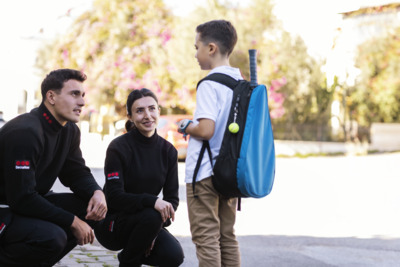
Technology is a powerful tool, but it is only half of the equation. The human element—specifically the frontline security guards who patrol schools, residential complexes, and public spaces—must be equipped to interact safely with autistic children.
Protecting vulnerable children means training security personnel to recognize and accommodate special needs. An aware and ready security team understands that:
-
Lack of response is not defiance: A child may be non-verbal or simply unable to process verbal commands during moments of high stress.
-
Sensory overload triggers behaviors: Hands over the ears, rocking, or bolting are often signs of distress, not threats.
-
De-escalation is paramount: Approaching a wandering child requires patience, a calm demeanor, and specialized de-escalation techniques, rather than physical force or loud commands.
Fighting the Stigma Together
Embracing neurodiversity is a two-pronged effort. We must fight the stigma by accepting autistic individuals exactly as they are, while simultaneously upgrading our safety protocols to protect them from the unique vulnerabilities they face. By combining empathetic, informed security personnel with cutting-edge smart technology, we can build a world where every child is safe to be themselves.
Find what Securitas can help for schools and homes.